


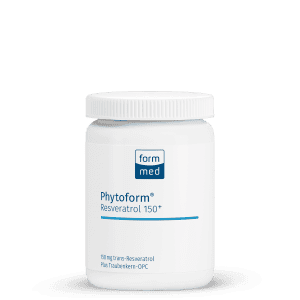
FormMed Phytoform® Resveratrol 150+
90 capsules · 1 capsule per day
H42EU7F8
Product description
Phytoform® Resveratrol 150+ combines 150 mg of trans-resveratrol with 15 mg of OPC and 20 mg of vitamin C. Unlike lower-dose polyphenol complexes, resveratrol is clearly the central component here, while OPC and vitamin C are complementary. The product character therefore sits between a single-ingredient product and a small cofactor combination.
Assessment by Oliver Fröhner
Micronutrient expert & Food Coach
Product character
Phytoform® Resveratrol 150+ combines 150 mg of trans-resveratrol with 15 mg of OPC and 20 mg of vitamin C. Unlike lower-dose polyphenol complexes, resveratrol is clearly the central component here, while OPC and vitamin C are complementary. The product character therefore sits between a single-ingredient product and a small cofactor combination. From a holistic perspective, concentrated resveratrol should be considered particularly carefully when medicines are used in parallel.
Formula & transparency
- Ingredients list fully checked
- Without microcrystalline cellulose according to the fully reviewed ingredient list
- Without silicon dioxide according to the fully reviewed ingredient list
- Lab report verified
- Product data reviewed within the freshness period
Points to consider
- A current product- or batch-specific notice is available.
Data basis
- HPMC/hydroxypropyl methylcellulose is declared.
Summary by Oliver Fröhner
Phytoform® Resveratrol 150+ combines 150 mg of trans-resveratrol with 15 mg of OPC and 20 mg of vitamin C. Unlike lower-dose polyphenol complexes, resveratrol is clearly the central component here, while OPC and vitamin C are complementary. The product character therefore sits between a single-ingredient product and a small cofactor combination.
Manufacturer information and Oliver Fröhner’s editorial assessment are presented separately. Data checked: 15 Sep 2026.
Active ingredients & NRV
Active ingredients
Ingredients & additives
trans-Resveratrol, Füllstoff (Cellulose, Natriumcarboxymethylcellulose), Kapselhülle (Überzugsmittel: Hydroxypropylmethylcellulose), Traubenkern-Extrakt, Calciumascorbat.
Directions & package
Take 1 capsule per day with food and plenty of liquid.
90 capsules · 90 days
Quality, lab & sources
Lab status: Lab report verified
150 mg trans-resveratrol plus 15 mg grape-seed OPC and 20 mg vitamin C. Vegan. Q360+; manufacturer statement: continuous laboratory monitoring of every batch; the currently offered batch has successfully passed GBA laboratory tests.
Product data checked on 15 Sep 2026.
Notes
If taking medication, use only after consultation with a doctor.
Nutrient knowledge & reference values
Nutrient knowledge & reference values
General nutrient information for interpreting the product dosage. Signs of insufficient or excessive intake are non-specific and do not replace a diagnosis.
Vitamin C
Vitamin C (ascorbic acid) is an essential water-soluble vitamin. presents physiological functions, the EU NRV, safety assessment and product-specific dosage separately.
Functions
EU-authorised health-claim functions include, among other things: vitamin C contributes to normal collagen formation for the normal function of blood vessels, bones, cartilage, gums, skin and teeth. It contributes to normal energy-yielding metabolism, normal functioning of the nervous system and immune system, and the protection of cells from oxidative stress. Vitamin C also contributes to the reduction of tiredness and fatigue and increases iron absorption.
Possible signs of insufficient intake
Severe vitamin C deficiency can lead to scurvy. Reported signs include fatigue, inflammation of the gums, pinpoint bleeding, increased capillary fragility and delayed wound healing. Such symptoms are not suitable for self-diagnosis.
Points to consider at high intake
EFSA was unable to derive a UL for vitamin C because of insufficient data. High additional intake can mainly cause gastrointestinal symptoms such as diarrhoea, nausea, bloating or abdominal cramps. With very high amounts, individual risk factors should be taken into account.
Special considerations
An increased risk of inadequate intake exists, among other situations, with a very one-sided diet, malabsorption and in smokers or people with substantial passive-smoke exposure. In haemochromatosis, particular caution is advisable with high-dose vitamin C because it increases non-haem iron absorption.
Interactions / caution
Vitamin C can increase non-haem iron absorption. High-dose supplementation in haemochromatosis should only be used after professional consultation. During chemotherapy or radiotherapy, high-dose antioxidant supplementation should be coordinated with the treating team.
H42EU7F8
The information is provided for factual classification of product and nutrient data. It does not replace medical diagnosis or individual treatment advice.
