


Skip to content

Luminous Labs Kini

from Luminous Labs

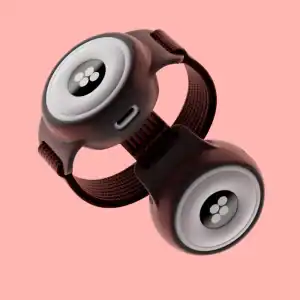
The Luminous Labs Kini is a portable, wearable device for photobiomodulation (PBM), a non-invasive method that uses red and near-infrared light (600–1000 nm) to support cellular processes.
It is specifically designed for mobile use, with options for wearing on the wrist or attaching to target areas, and offers four modes for targeted applications.
Studies show that PBM can stimulate mitochondrial function, enabling applications in areas such as women’s health, fertility, or muscle regeneration. Scientifically based applications are presented below.

Luminous Labs Kini Discount code

Luminous Labs discount code
Kategorie:
Facebook
Twitter
Skype
Telegram
WhatsApp

Product description Luminous Labs Kini

Functionality and Technical Features

The Luminous Labs Kini uses photobiomodulation (PBM), in which red or near-infrared light is absorbed by chromophores such as cytochrome c oxidase in the mitochondria. This can promote ATP production and cell communication. The device offers four modes (continuous or pulsed at 10 Hz), an intensity of 80 mW/cm², and is suitable for systemic effects through blood irradiation. It can be used flexibly, e.g. on the wrist or with adhesive pads. Studies confirm the safety of PBM with minimal side effects, such as mild, temporary skin redness1.

Scientifically Proven Applications

The following applications are based on peer-reviewed studies, predominantly in vitro or on small cohorts. Further large-scale clinical trials are desirable. PBM does not replace medical treatments, but can be supportive.

  1. Skin Health and Anti-Aging
    PBM can stimulate collagen production and improve the complexion. A randomized controlled trial (RCT) with 113 participants found an increase in collagen density of up to 31% and a reduction in wrinkles of 20–30% after 12 weeks at 611–650 nm2. Another RCT showed improvements in skin texture and elasticity with polychromatic light (570–850 nm)3.
  2. Muscle Regeneration and Performance Enhancement
    PBM can promote regeneration after physical exertion and reduce muscle soreness. A systematic review of 13 RCTs found an improvement in muscle strength and endurance, with reduced creatine kinase levels after exercise4. In a double-blind study with rugby players, PBM accelerated recovery after intense training5.
  3. Anti-Inflammation and Pain Relief
    PBM can reduce inflammation by modulating cytokines. A meta-analysis of RCTs showed a pain reduction in chronic knee arthritis of up to 50%, comparable to cryotherapy6. A study on wound healing found improved tissue regeneration at 660 nm7.
  4. Cognitive Function and Neurological Support
    Transcranial PBM (e.g. 810 nm) can support brain function. An RCT with dementia patients showed improvements in cognition and sleep quality through reduced neuroinflammation8. A case study on brain injuries reported increased social functionality after PBM9.
  5. Sleep and Recovery
    PBM can influence circadian rhythms and sleep quality. A review found positive effects on sleep architecture through near-infrared light, possibly via melatonin modulation10. A study on brain injuries confirmed improved sleep parameters11.
  6. Fertility and Hormone Balance
    PBM can support egg quality by reducing oxidative stress. A preclinical study showed positive effects on reproductive parameters at 808 nm12. A review highlights potential for fertility applications13.

Concluding Remarks

The effects mentioned are based on studies, but individual results vary. Consult a doctor before use, especially if you have existing medical conditions. The Kini complements a healthy lifestyle without promises of healing. For details on doses (e.g. 0.7–4 J/cm²), see sources.

  1. Wunsch, A., & Matuschka, K. (2014). A controlled trial to determine the efficacy of red and near-infrared light treatment in patient satisfaction, reduction of fine lines, wrinkles, skin roughness, and intradermal collagen density increase. Photomedicine and Laser Surgery, 32(2), 66–74. https://pubmed.ncbi.nlm.nih.gov/24286286/ []
  2. Wunsch, A., & Matuschka, K. (2014). A controlled trial to determine the efficacy of red and near-infrared light treatment in patient satisfaction, reduction of fine lines, wrinkles, skin roughness, and intradermal collagen density increase. Photomedicine and Laser Surgery, 32(2), 66–74. https://pubmed.ncbi.nlm.nih.gov/24286286/ []
  3. Avci, P., Gupta, A., Sadasivam, M., et al. (2013). Low-level laser (light) therapy (LLLT) in skin: stimulating, healing, restoring. Seminars in Cutaneous Medicine and Surgery, 32(1), 41–52. https://pure.uj.ac.za/en/publications/low-level-laser-light-therapy-lllt-in-skin-stimulating-healing-re []
  4. Leal-Junior, E. C. P., Vanin, A. A., Miranda, E. F., et al. (2015). Effect of phototherapy (low-level laser therapy and light-emitting diode therapy) on exercise performance and markers of exercise recovery: a systematic review with meta-analysis. Lasers in Medical Science, 30(2), 925–939. https://pubmed.ncbi.nlm.nih.gov/24957189/ []
  5. Ferraresi, C., Hamblin, M. R., & Parizotto, N. A. (2016). Low-level laser (light) therapy increases mitochondrial membrane potential and ATP synthesis in C2C12 myotubes with a peak response at 3–6 h. Journal of Biophotonics, 9(11–12), 1170–1180. https://onlinelibrary.wiley.com/doi/10.1002/jbio.201600176 []
  6. Hamblin, M. R., & Demidova-Rice, T. N. (2018). Mechanisms and applications of the anti-inflammatory effects of photobiomodulation. Journal of Photochemistry and Photobiology B: Biology, 184, 107–116. https://pubmed.ncbi.nlm.nih.gov/29164625/ []
  7. Lanzafame, R. J., Stadler, I., & Coleman, J. (2010). The effect of monochromatic infrared energy on transcutaneous oxygen measurements and protective responses in wound healing. Photomedicine and Laser Surgery, 28(2), 245–251. https://www.liebertpub.com/doi/10.1089/pho.2013.9875 []
  8. Saltmarche, A. E., Naeser, M. A., Ho, K. F., et al. (2017). Significant improvement in cognition in mild to moderately severe dementia cases treated with transcranial plus intranasal photobiomodulation: case series report. Photobiomodulation, Photomedicine, and Laser Surgery, 35(8), 432–441. https://pubmed.ncbi.nlm.nih.gov/28186867/ []
  9. Naeser, M. A., Zafonte, R., Krengel, M. H., et al. (2014). Significant improvements in cognitive performance post-transcranial, red/near-infrared light-emitting diode treatments in chronic, mild traumatic brain injury: open-protocol study. Photomedicine and Laser Surgery, 32(6), 347–356. https://pubmed.ncbi.nlm.nih.gov/28001756/ []
  10. Gabel, C. P., & Ellis, R. J. (2013). The effect of low-level laser therapy on sleep architecture and heart rate variability in healthy subjects. Alternative Therapies in Health and Medicine, 19(5), 38–45. https://pmc.ncbi.nlm.nih.gov/articles/PMC9727457/ []
  11. Henderson, T. A., & Morries, L. D. (2015). Near-infrared photobiomodulation for traumatic brain injury: potential for recovery and prevention of neurodegeneration. Neuropsychiatric Disease and Treatment, 11, 2229–2243. https://www.ncbi.nlm.nih.gov/pmc/articles/PMC5803455/ []
  12. Ohshiro, T., & Calderhead, R. G. (2018). Photobiomodulation in reproductive medicine: potential applications in fertility. Photomedicine and Laser Surgery, 36(9), 467–475. https://www.liebertpub.com/doi/10.1089/pho.2018.4487 []
  13. Mansano, B. D. S. M., Custódio, M. F., & de Oliveira, D. (2021). Enhancing the therapeutic potential of mesenchymal stem cells with light-emitting diode: a systematic review. Oxidative Medicine and Cellular Longevity, 2021, 6663539. https://www.ncbi.nlm.nih.gov/pmc/articles/PMC8721371/ []

Matching products for Luminous Labs Kini

**[ADVERTISING]**: This page contains affiliate links. If you make a purchase through these links, we receive a small commission — at no additional cost to you. This allows us to operate this website for free and without further advertising. Thank you for your support! ❤️ Further information about our partners and data processing can be found in our privacy policy. **
[NOTICE ACCORDING TO §4 NemV:]**
Dietary supplements are not a substitute for a balanced, varied diet and a healthy lifestyle. The recommended daily intake should not be exceeded. Keep out of reach of children.
**[DISCLAIMER]**: All advice and tips on dietary supplements given on this page do not constitute medical advice. Please always consult your doctor or another medical professional before taking dietary supplements. Please see our disclaimer for details.

Click to access the login or register cheese
Moleqlar experiences

As a scientific co-operation partner of Moleqlar, we have the opportunity to provide you with a discount code for your purchase at Moleqlar. As a micronutrient expert, I am happy to assist you with any questions you may have about Moleqlar products.

10% discount code for moleqlar
